
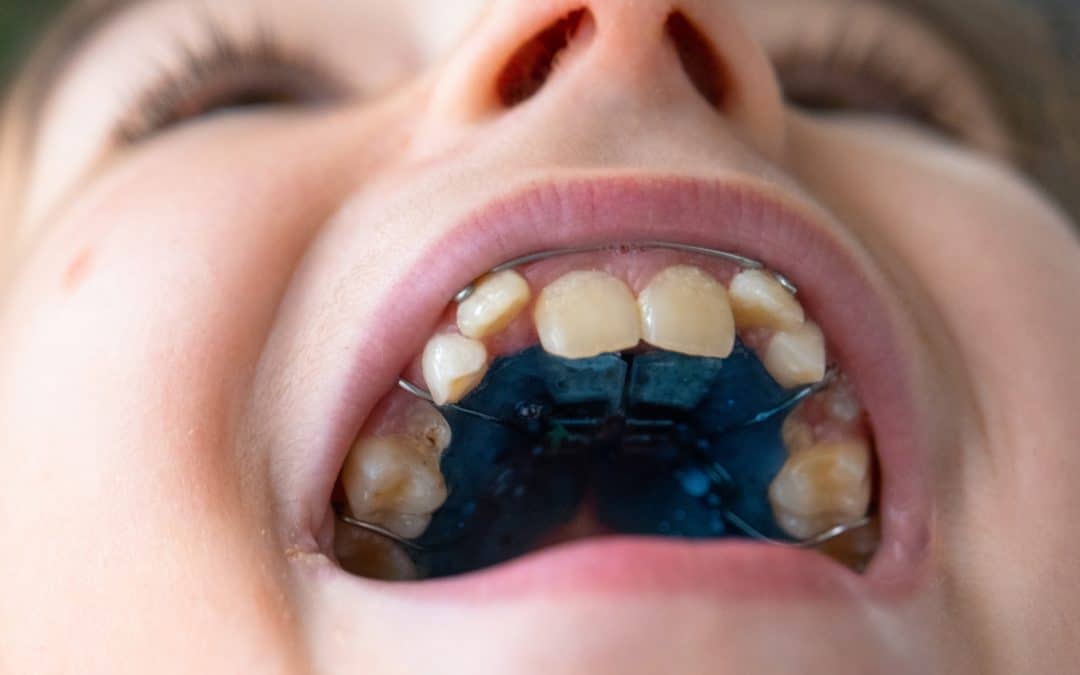
When parents hear that their child may need a palate expander, one of the first questions is usually about timing. Is age 7 too early? Is age 12 too late? Will waiting make treatment harder? These are fair questions, especially when you want to make the right decision for your child’s health, comfort, and long-term smile.
The best age for a child to get a palate expander is often between 7 and 10 years old, while the upper jaw is still growing and more responsive to orthodontic guidance. Some children may benefit from expansion between ages 7 and 12, depending on their bite, jaw development, tooth eruption, airway needs, and whether the upper jaw is too narrow.
That said, age 7 is not always the starting line. Some children benefit from an earlier orthodontic conversation, especially if a myofunctional therapist, pediatric dentist, or parent notices signs such as mouth breathing, oral habits, a narrow upper jaw, or a crossbite in the baby teeth.
At Eversmile Orthodontics in South Jordan, UT, Dr. Ryan Davis evaluates each child individually. As a board-certified orthodontist, Dr. Davis looks beyond tooth alignment alone. Our approach considers facial harmony, bite function, airway development, aesthetics, and long-term stability so every recommendation is made with intention.
This Article will address
- What a palate expander is and how it works
- What age a kid should get an expander
- What age is best for an expander
- Signs your child may need a palate expander
- How expanders may help with crowding, crossbite, and narrow jaw development
- Whether palate expanders can support breathing or airway concerns
- What happens if palate expansion treatment is delayed
- At what age expanders stop working
- What life with a palate expander is like for kids
- Where to schedule a palate expander consultation in South Jordan, UT
What Is a Palate Expander and How Does It Help a Child’s Smile?
A palate expander is an orthodontic appliance used to gently widen the upper jaw. It is commonly recommended for children whose upper jaw is too narrow for their developing teeth, bite, or facial structure.
The upper jaw develops in two halves. While a child is still growing, an expander can guide those two halves apart gradually, giving the arch more width. As space opens, new bone fills in and helps stabilize the change.
A palate expander may help:
- Create more room for permanent teeth
- Improve bite alignment
- Correct certain crossbites
- Reduce crowding caused by a narrow upper jaw
- Support healthier jaw and facial development
- Improve the foundation for future orthodontic treatment
At Eversmile Orthodontics, palate expanders may be part of Phase I orthodontics, interceptive treatment, growth modification, or airway-focused orthodontic care. The goal is not simply to make teeth look straighter. The goal is to help build a healthy, stable smile that supports your child’s function, confidence, and long-term development.
What Age Should a Kid Get an Expander?
A child may be ready for a palate expander around age 7 or 8 if an orthodontist sees signs of a narrow upper jaw, crossbite, crowding, or growth concerns. This does not mean every child needs treatment at that age. It means this is a valuable time for an orthodontic evaluation.
The American Association of Orthodontists recommends a first orthodontic evaluation no later than age 7. That recommendation is a helpful benchmark, but it should not be misunderstood as the earliest time a child can be seen. Children referred by myofunctional therapists or pediatric dentists, or children already showing signs such as mouth breathing, oral habits, narrow jaw development, or a crossbite in the baby teeth, may benefit from an earlier conversation with an orthodontist.
Around age 7, many children have a mix of baby teeth and permanent teeth. This gives an orthodontist important information about how the jaws are growing, how the bite is developing, and whether permanent teeth have enough space to come in properly.
At Eversmile Orthodontics, Dr. Davis evaluates each child’s:
- Upper jaw width
- Bite relationship
- Tooth eruption pattern
- Facial balance
- Airway-related concerns
- Oral habits, such as thumb-sucking or mouth breathing
- Need for Phase I orthodontics or future treatment
Some children may need early intervention. Others may simply need growth monitoring. Either way, an early evaluation helps parents make informed decisions instead of waiting until problems become more complex.
What Age Is Best for an Expander?
For many children, the best age for an expander is between 7 and 10. During this stage, the upper jaw is still developing and may respond more comfortably and predictably to orthodontic expansion.
This age range is often ideal because the bones of the palate have not fully matured. When treatment is recommended at the right time, a palate expander may guide growth more efficiently than it would during the later teen years.
That said, the best age for a palate expander depends on the child, not just the number of candles on their birthday cake. Some children may still be good candidates between ages 10 and 12. Others may need monitoring before treatment begins. In some cases, functional appliances and early interceptive guidance may be appropriate before the mixed dentition stage when growth, airway, oral habits, or bite concerns are already present.
The right timing depends on:
- Whether the upper jaw is too narrow
- Whether a crossbite is present
- How crowded the teeth are
- Whether permanent teeth are coming in properly
- Whether the child’s jaw growth is balanced
- Whether airway or breathing concerns are part of the bigger picture
- Whether a trusted provider has noticed early functional concerns
Our team focuses on personalized orthodontic care because every child grows differently. At Eversmile Orthodontics, we do not recommend an expander simply because a child is a certain age. We recommend treatment when it supports healthier growth, better function, and lasting results.
What Signs May Mean My Child Needs a Palate Expander?
Your child may need an orthodontic evaluation for a palate expander if you notice signs that the upper jaw may be too narrow or the bite may not be developing properly.
Common signs include:
- Crowded teeth
- A narrow-looking smile
- A crossbite
- A crossbite in the baby teeth
- The lower jaw shifting to one side when biting
- Difficulty with permanent teeth coming in
- Impacted or poorly erupting teeth
- Mouth breathing
- Snoring or restless sleep
- Thumb-sucking or prolonged oral habits
- Trouble biting or chewing evenly
- Teeth that do not seem to fit together correctly
- Referral from a myofunctional therapist or pediatric dentist
These signs do not automatically mean your child needs a palate expander. Crowding, bite issues, oral habits, and airway concerns can have different causes. The best way to know is through an orthodontic evaluation with a trained specialist.
Dr. Davis looks at the full picture before recommending treatment. That includes the smile, bite, jaw growth, airway, facial balance, oral function, and long-term stability.
Can a Palate Expander Help With Crowding, Crossbite, or a Narrow Jaw?
Yes, a palate expander can help with certain cases of crowding, crossbite, and narrow upper jaw development. When the upper jaw is too narrow, there may not be enough room for permanent teeth to come in properly. The upper teeth may also fit inside the lower teeth, creating a crossbite.
A palate expander may help by widening the upper arch and improving the relationship between the upper and lower jaws. This can create a healthier foundation for future orthodontic treatment.
Palate expansion may help:
- Make more room for permanent teeth
- Improve upper and lower jaw fit
- Correct certain crossbites
- Reduce crowding caused by a narrow upper jaw
- Support a more balanced bite
- Improve long-term orthodontic stability
However, not every child with crowded teeth needs a palate expander. Some crowding is related to tooth size, eruption timing, or other growth factors. At Eversmile Orthodontics, treatment is carefully planned to avoid unnecessary or excessive expansion. Our focus is on creating a smile that is healthy, functional, balanced, and built to last.
Can a Palate Expander Help With Breathing or Airway Concerns?
A narrow upper jaw can sometimes be connected to mouth breathing, nasal airflow concerns, or broader airway-related development issues. For some children, palate expansion may support better oral structure by creating more room in the upper arch and helping guide facial growth.
It is important to be clear that a palate expander is not a guaranteed solution for breathing problems or sleep concerns. Airway health can involve many factors, and some children may need care from other medical or dental providers.
At Eversmile Orthodontics, Dr. Davis takes an airway-aware approach when appropriate. Our growth modification and airway-focused orthodontic care considers how jaw development, oral posture, breathing patterns, and bite function may work together.
If your child struggles with mouth breathing, snoring, restless sleep, oral habits, or a narrow upper jaw, an orthodontic evaluation can help determine whether expansion, functional appliances, or early interceptive guidance should be part of the conversation.
What Happens If Palate Expansion Treatment Is Delayed?
If palate expansion treatment is delayed, the upper jaw may become less flexible as the child grows. This can make traditional expansion less predictable in the teen years and may make orthodontic treatment more complicated.
Waiting too long may allow certain concerns to progress, such as:
- Worsening crowding
- Crossbite becoming more established
- Uneven bite development
- Permanent teeth erupting in poor positions
- Jaw imbalance becoming harder to guide
- More complex treatment needs later
This does not mean every child needs early treatment. It means timing matters. The purpose of an early orthodontic evaluation is to determine whether treatment is needed now, later, or not at all.
When expansion is recommended at the right stage, treatment may be more efficient and comfortable. When a patient has already passed the traditional expansion window, other options may still exist. For older teens and adults, Eversmile Orthodontics may offer skeletal expansion options, including MARPE, when appropriate.
At What Age Do Expanders Stop Working?
Expanders do not stop working at one exact age for every child. Traditional palate expanders tend to work best before the upper jaw fully matures. For many children, expansion becomes less predictable after puberty because the bones of the palate become more fused.
Skeletal maturity matters more than age alone. Some children mature earlier, while others continue growing longer. This is why an orthodontic exam is so important.
In general:
- Younger children often respond more easily to traditional expansion
- Ages 7 to 10 are commonly ideal for many children
- Ages 10 to 12 may still be appropriate for some patients
- Older teens may need a different treatment approach
- Adults may require more advanced expansion options
Eversmile Orthodontics also offers skeletal expansion options for older teens and adults when appropriate. MARPE, or miniscrew-assisted rapid palatal expansion, may be considered for patients who are past the ideal age for traditional palate expansion but still need upper jaw widening. For children, the goal is to evaluate growth early enough to use the most conservative and effective approach possible.
Does Getting a Palate Expander Hurt?
Getting a palate expander should not be painful, but your child may feel pressure after adjustments. This pressure is a normal part of the expansion process. Some children also feel mild soreness in the teeth, roof of the mouth, or cheeks as they adjust.
Most children adapt to a palate expander within a short period of time. Eating, speaking, and swallowing may feel different at first, but these changes usually become easier with practice.
Our team will explain:
- How the expander works
- What pressure may feel like
- How to clean around the appliance
- What foods to avoid
- When to contact our office
- How parents can help with at-home instructions
At Eversmile Orthodontics, we want children and parents to feel comfortable, informed, and supported throughout treatment.
How Long Will My Child Need to Wear a Palate Expander?
The amount of time a child wears a palate expander depends on the treatment plan. The active expansion phase may be relatively short, but the appliance may stay in place longer to help stabilize the result while new bone forms.
Some children may only need active adjustments for several weeks, while the full appliance wear time may be longer. Dr. Davis will explain your child’s expected timeline before treatment begins.
The goal is not just to widen the jaw and move on. Stability matters. At Eversmile Orthodontics, we believe orthodontic treatment should be built to last. That means we focus on retention, bite function, and long-term health, not quick fixes.
Can My Child Eat, Speak, and Go to School Normally With a Palate Expander?
Yes, most children can eat, speak, and go to school normally with a palate expander, although there is usually an adjustment period.
At first, your child may speak differently or produce extra saliva while the mouth gets used to the appliance. Reading aloud at home can help speech improve more quickly. Eating may also feel different for the first few days.
Your child may need to avoid:
- Sticky candy
- Hard foods
- Chewy snacks
- Gum
- Foods that can get trapped around the appliance
Good brushing and rinsing are also important because food can collect around the expander. Our team will show your child how to keep the appliance clean and comfortable.
Most palate expanders are not very noticeable to others, and children usually adjust faster than parents expect.
Why Choose Eversmile Orthodontics for Palate Expander Treatment in South Jordan, UT?
Families choose Eversmile Orthodontics for palate expander treatment in South Jordan, UT because our care is personal, precise, and built around long-term results.
Dr. Ryan Davis, DDS, MSD, is a board-certified orthodontist who blends science, artistry, and patient-centered care. His treatment philosophy focuses on more than straight teeth. He considers facial harmony, bite function, airway development, aesthetics, and smile stability. .
Eversmile Orthodontics offers:
- Phase I and Phase II orthodontics for children and teens
- Interceptive treatment and space maintenance
- Growth modification
- Airway-focused orthodontic care
- Functional appliances and early interceptive guidance when appropriate
- Skeletal expansion options for older teens and adults
- Advanced orthodontic technology
- Personalized treatment plans
- Flexible payment options
- Free consultations
- A warm, supportive team that treats families with care
We know parents want clear answers. Our team takes time to explain what we see, what your child may need, and why a specific treatment timeline makes sense. If your child does not need an expander, we will tell you. If treatment could help, we will walk you through the next steps with confidence and care.
Schedule a Palate Expander Consultation in South Jordan, UT
If you are wondering whether your child is the right age for a palate expander, the best next step is an orthodontic evaluation. The ideal timing depends on your child’s growth, bite, airway needs, tooth development, oral function, and jaw structure.
At Eversmile Orthodontics in South Jordan, UT, Ryan Davis, DDS, MSD, provides personalized early orthodontic care designed to support healthy growth and confident smiles. Our goal is to help your family understand your child’s options and choose the path that supports long-term function, beauty, and stability.
To schedule a consultation with Eversmile Orthodontics, call 801.254.2700 or book online through our contact form.
Sources

Dr. Ryan Davis
Ryan Davis is a Board Certified Orthodontist dedicated to creating healthy, confident smiles that are built to last. As the founder of the Utah Airway Study Club and a board member of the Utah Association of Orthodontists, he brings advanced training, personalized care, and a strong focus on facial harmony, function, and long-term stability to every patient’s smile journey.